Wednesday, February 21, 2007

Ash Wednesday


Sermon Preached on Ash Wednesday, February 21, 2007

Ash Wednesday; Mass
Joel 2:1-2,12-17, Psalm 103:8-14; 2 Corinthians 5:20b-6:10, Matthew 6:1-6,16-21


Today is the first day of Lent, the season of preparation for Easter. On Ash Wednesday, when ashes are imposed, the words “remember you are dust and to dust you will return” are spoken. When I hear those words, I am reminded of the common humanity I share with the everyone on earth, rich or poor, sick or healthy, friend or stranger – we are all made of the same stuff, and Jesus loved us all so much that he died and rose so that we could all have eternal life in him.

I think that the traditional methods of observing Lent, prayer and fasting, can be tools to live out our calling by Jesus to love one another as much as he loved us.

Perhaps this Lent you’ve decided to fast, or you’ve decided to give something up for the duration of Lent. You might take the money saved each week and give it directly to one of the many soup kitchens in the city. Maybe you’ve decided to set aside time for prayer and reflection this Lent. When carving out that time, perhaps you can also set aside time to volunteer in some outreach or charity program. Maybe this Lent you’ve decided to attend a church service each week or each day. You might try to bring one person with you each week, someone who hasn’t been to church in a whole or maybe someone who has never been to church at all.

Lent is a time that is often used to do what we can to bring ourselves into a closer relationship with God and each other. Our Gospel today warns us against practicing acts of piety simply for the sake of being pious. This Lent I invite you open your hearts to the Holy Spirit, that through prayer, fasting and piety you may be led by God to spread his eternal love to someone else.

Sunday, February 18, 2007

...all nations


Sermon preached at Evensong & Benediction on February 18, 2007.

Year 1, Last Epiphany, Sunday, Evensong and Benediction:
Ecclesiasticus 48:1-11, John 12:24-32; 1 Corinthians 10:16-17


This morning my son was baptized. From my perspective as a priest at Saint Mary’s and as a Christian, the most exciting thing that happens throughout the church year is when someone is baptized. As a priest in at Saint Mary’s I am thrilled that we have gained a new member. But as a Christian that I am even happier because when someone is baptized we are living out the great commission which Jesus gave to us before his ascension to the Father: “Go make disciples of all nations, baptizing them in the name of the Father and of the Son and of the Holy Spirit.”

In our Gospel Lesson Jesus says of his coming glory “when I am lifted up from the earth, I will draw all men to myself”. As a parent, one way I can be a part of that drawing of all people to Christ is to have my children baptized and raise both to follow Christ and to lead others to him. As a priest I can preach the gospel from the pulpit in an effort to tell others that God loves them so much that he offers eternal life to everyone. As a Christian I can follow the example set by saints who spread the Gospel to others. Last week we celebrated the life of Thomas Bray, an English priest who lived about 400 years ago. One of the things that he is most famous for is having spent some time in America questioning chastising Christians who refused to treat black slaves and American Indians as people and therefore refused to spread the Gospel to them.

Today is the last Sunday before Lent. Often people find things to give up for Lent. Often people add acts of piety or devotion, such as attending Daily Mass or Stations of the Cross. I believe those are noble things to do in Lent. In addition, I think that Lent can also be a time to reflect and act on our calling to spread the Gospel to all nations and ensure that the whole world is drawn to Jesus.

Sunday, February 11, 2007

The Beatitudes


Sermon preached Sunday February 11, 2007.

Year C; Sixth Sunday After Epiphany;

Psalm 1; Jeremiah 17:5-10; 1 Corinthians 15:12-20; Luke 6:17-26


Our Gospel reading this morning is the beginning of what is commonly known as the Sermon on the Plain. It begins with the Beatitudes as they are reported by Saint Luke:

Blessed are you poor, for yours is the kingdom of God.

Blessed are you that hunger now, for you shall be satisfied.

Blessed are you that weep now, for you shall laugh.

Blessed are you when men hate you, and when they exclude you and revile you, and cast out your name as evil, on account of the Son of man! Rejoice in that day, and leap for joy, for behold, your reward is great in heaven; for so their fathers did to the prophets.

I think that most people are more familiar with Saint Matthew’s Beatitudes which are decidedly more spiritual. Compare Matthew’s “Blessed are the poor in spirit” to Luke’s “Blessed are the poor.” Or Matthew’s “Blessed are those who hunger and thirst for righteousness” to Luke’s “Blessed are you that hunger now.”

Christians have often viewed the Saint Luke’s down to earth Beatitudes as a starting point on how to live as believers. Some Christians have taken them literally. Christians, such as Saint Francis, have tried to live as the Blessed Poor by renouncing all worldly goods and putting their wellbeing completely in God’s hands. Christians have tried to live as the “Blessed Hungry” by fasting on certain days of the year – satisfying themselves not with food, but through prayer and reflection. Christians, such as Saint Ambrose and Saint Augustine, have tried to be “Blessed Mourners” who weep over their sins and transgressions. Christians, such as Saint Ignatius of Antioch and other martyrs of the early church, have tried to live and die as the “Blessed Persecuted” by joyfully undergoing persecutions and martyrdom for the sake of Jesus.

There is a venerable tradition of Saints living out the Beatitudes literally, but I’m not so sure that everyone is called to live run naked through the streets like Saint Francis, confess our sins as publicly as Augustine did, or seek out persecutions as some in the early church did.

If we take Jesus’ great command to love one another as he loved us as our starting point, I think the Beatitudes from Saint Luke can spur us to try to spread the blessings that God has given us to others. One week ago a friend of mine who had been sick for many years died. Her husband who is also a friend of mine is mourning her loss. What can I do to comfort him? Reach out to him and let him know he and his wife are in my thoughts and prayers. In this week’s Angelus Father Beddingfield wrote about the overwhelming hunger and poverty he encountered on his Mission trip to Honduras. What can I do to help those hungry and poor? I can take one of many opportunities and put more in the collection plate on Maundy Thursday when all money from the collection is given to Honduras.

Jesus says: “No one after lighting a lamp covers it with a vessel, or puts it under a bed, but puts it on a stand, that those who enter may see the light.” I believe we are called to shine the light of Christ on others and spread the blessings that God has given us to others,. What blessings has God given us? In what ways can we share those blessings with others?

Tuesday, January 23, 2007

Week of Christian Unity


Sermon preached
Year 1, Epiphany 3 (3rd week in ordinary time), Tuesday, Mass:
Psalm 40:1-11*; Hebrews 10:1-10; Mark 3:31-35


The week for Prayer of Christian Unity continues today. Unlike most "weeks" that begin on Sunday and end on Saturday, this week is determined by the date of two feasts: the Confession of St Peter (Januray 18) and the Conversion of St Paul (January 25). Paul and Peter were somewhat notorious for not always getting along. In his Letter to the Galatians Paul writes about a certain visit to Antioch where Paul opposed Peter to his face and Peter stood condemned for his behavior towards Gentile Christians. The church has been praying for unity since the days of the early church.

Today's Gospel speaks on family. Jesus offers a striking statement that his family is made up of those who do will of God. In my own family, and I suspect in every family, there are arguments, there are disagreements, and there are even fights. But one of the things I always try to do is to make sure the disagreements I have had with my sister or my mother or my father or my wife do not end up dividing us. There is an saying that going to bed angry only sows the seeds of discontent.

One of the great tragedies in family life is the fact that sometimes disagreements do indeed lead to division. There are families where brothers refuse to speak to sisters, mother's to daughters, and so forth. There are even families where members of the family refuse to recognize each other as family. Likewise, one of the great targedies in the church is that we are divided over our disagreements. Christians fight, often refuse to speak to each other and sometimes go so far as to refuse to recognize Christ in other Christians.

Our Gospel today reminds us that we are made sons and daughters of God through our Baptism into the one Body of Christ. Peter and Paul had disagreements, but they agreed that they had faith in the one Lord Jesus Christ who died for all of our sins and who rose again so that each of us can have eternal life in him. This week our prayers are asked of the church for the church to help each of us recognize that we are all children of the one God and that we are brothers and sisters in Christ.

Wednesday, January 03, 2007

Updates & Sermons

Generally, I preach somewhere between 5 and 8 times each week. I put up what I can when time permits. I hope to add a few more sermons preached over the last few weeks and also some new ones too. Updates have been (and probably will remain) slow because my wife and I now have a child! His name is Liam, he's 7 weeks old. Happy New Year!

Sunday, December 10, 2006

“we piped and you did not dance, we wailed and you did not weep”


Sermon preached at Evensong on Sunday Advent 2 (December 2006)

Tonight’s second reading is the second half of a larger passage about John the Baptist. Jesus’ remarks about John come after John has sent his own disciples to see whether Jesus is the Christ. Jesus responds by healing many people and preaching the good news to the poor and telling John’s disciples to reply with what they have seen and heard.

Jesus next turns his attention to the crowd. He exclaims that some of them have taken John’s preaching of repentance and forgiveness to heart and some have not. He compares those who do not accept John’s teaching to children who become hostile when someone won’t follow their lead: “we piped and you did not dance, we wailed and you did not weep”.

I believe that the church today can take Jesus’ message to heart. It can be easy to get upset when other people walk to the beat of a different drum or when they don’t follow the lead that we set. From my own perspective as a priest at Saint Mary’s I get frustrated when I go to other churches and they worship in ways that are different than what I prefer. I also get frustrated looking at the various factions of the church trying to push and pull the everyone else in many different directions. In my perfect world everyone would always follow my lead, but most likely my idea of a perfect world isn’t exact the same as yours.

I think that one way that we avoid falling into the “my way or the highway” trap is to follow the example. Of John the Baptist John knew that Jesus was from God because he saw that he spread the love of God to others through his words and his deeds. I think that we can do the same. I don’t think that concentrating time and energy on spreading division and trying to force others to go our way is very productive. However, when we concentrate our time and energy on spreading the love of God to others through what we do and what we say, then not only do differences seem less important but we find that more and more people join us as we follow the way of Christ.

Tuesday, December 05, 2006

Whe are here for Jesus


Sermon Preached on November 19, 2006
Proper 28B
Daniel 12:1-4a(5-13)Hebrews 10 31-39Mark 13:14-23Psalm 16 or 16:5-11


On Monday my wife gave birth to our first son, Liam. He’s awesome and I would love to stand up here and tell you all about him, but stories about my son are not why we are gathered here today. We are gathered together because of Jesus Christ.

In our Gospel reading today Jesus speaks of times of anguish and despair out of which God’s people are delivered to eternal life. Probably these refer to the sack of Jerusalem and the destruction of the Temple by the Romans in 70 AD. That event was a transformative event for the early church in that a great piece of its Jewish roots was gone. What to do?

That I think is exactly the same question we can ask ourselves when we read this passage today. Unless you want to sell books or be featured in the history channel, I’m not sure its helpful to identify these times of anguish and desolation as the prelude to the Second Coming – trying to see signs in the world around us as to when it will happen. Nor am I sure that its helpful to try to figure out who will be delivered and who will not. Rather I think the question we can ask ourselves is the same one the people of the early church asked. What are we to do in the times – difficult times – that we often find ourselves in?

Jesus warns that some people will take the opportunity to point out false Messiahs and false prophets. If you turn on the TV or pick up a newspaper there are always people telling you that life is only worth living when you have power, money, possessions, or pleasure. This isn’t limited only to the secular world. I have heard any number of church leaders point to good solid things like peace, justice and the self-empowerment and claim that that salvation lies within them.

As important and wonderful as it may be to have money, enjoy life, work for peace and feel self satisfied, all of these can act as distractions from seeking out, experiencing and spreading the love that God has for all of us in Jesus Christ. Jesus offers eternal life, can anything else claim to do that?

Next week is the feast of Christ the King, the last Sunday of the church year before Advent begins. At Saint Mary’s we celebrate this feast by committing ourselves to Jesus. Commitment Sunday is the time to identify those things is our own lives that are important to us see where our priorities really are. Often this means taking an honest account of where and how we spend our money. Do I spend as much money on Jesus as I did on going out to fancy restaurants or going to concerts or going on vacation? Is the time I invest in church and at prayer reflected in the money I give to support the church? Those are questions that I think are important for all of us to ask ourselves.

As I ask myself these questions I wonder what it will mean financially to have a child. My wife and I intend to continue pledging 10% of our income to the church. Its not going to be easy. We will have to give up some things. But I don’t intend to limit my questioning to money. Three days ago my father came by to see our son. He said that one of the things he always prayed for his children was that they would see the face of Jesus. How can I help my son to see the face of Jesus as he grows up? How can I help others to see the face of Jesus?

Over the next week I invite you to join me in asking how Jesus fits into your life. How does Jesus fit into your financial planning for next year? How do you plan to show the face of Jesus to those who are important to you over the next year?

Sunday, November 26, 2006

Christ the King


Sermon Preached at Evensong & Benediction on the feast of Christ the King.

Today we celebrate the feast of Christ the King. What is Christ’s kingdom and what does it mean for us? I think one answer to those questions can be found in tonight’s readings.

In our first reading the Prophet Isaiah sees a day when the two great nations, Egypt and Assyria, who have historically been opposed to the Jewish people will unite with Israel to worship the Lord. He literally sees many of their differences being paved over with a great highway that stretches through each land.

In our second reading, Peter writes that Christ died for the sins of all, the righteous as well as the unrighteous, that he might bring all of us to God. He illustrates his point by stating that Jesus preached even to the dead, thus ensuring that everyone hear the Good News.

Christ’s kingdom is open for all of us. Jesus is the savior and head of all peoples. Not just some peoples, not just important peoples or rich peoples, but all peoples. And he invites all of us to become citizens of his kingdom through Baptism.

As people of faith and citizens of that kingdom, I believe that we are called to show others that God welcomes them too. There are many ways to do that, but I think Saint Peter gives a good starting point. He says: “Always be prepared to make a defense to any one who calls you to account for the hope that is in you, yet do it with gentleness and reverence.”

Whether greeting a newcomer at church on a Sunday morning, talking with a friend over coffee, or answering questions from a stranger on a train, I think that being able to speak kindly with others about our faith in Jesus can help point someone towards Jesus. I think that’s something that each of us can do. I believe that it is something that we, as citizens of Christ’s kingdom, are called to do.

Sunday, November 05, 2006

Evensong at Saint Thomas, Fifth Avenue


ALL SAINTS' DAY; NOVEMBER 1: EVENING PRAYER:

My first experience of Saint Thomas came about 11 years ago. When I first walked through the door I stood– like most people I think – and just stared at the amazing raredos. To this day I think its one of the most breathtaking and beautiful pieces of art that I have ever seen.

I want to talk a little bit this evening about how we identify the saints. At Saint Thomas, you can pick up an official pamphlet that identifies everyone on the reredos. In the real world its often not so simple.

In the passage read tonight from his Revelation, Saint John refers to those who enter into the New Jerusalem as those who are written into the book of life. In a passage that is read at Mass on All Saints’ Day, he speaks about 144,000 who are marked with the seal of God. Sometimes Christians view passages like this as a way to identify who is saved and who is not.

One night years ago after answering the door my mother was greeted – as probably has happened to many of us – with the question of whether she had been saved. When the woman pressed her about her salvation, my mother asked a question. “Doesn’t your church believe that only 144,000 people are saved?” “Yes”, the woman said, “It says so in the Book of Revelation.” “And how many members does you church have?”, asked my mother. “10 million”, the woman answered proudly. “Well, why are you trying to recruit more members when there isn’t enough room in heaven for the ones you already have?”. The woman had no response.

Its important to note that Saint John also sees a multitude from all nations standing before the throne of God. A multitude so large that it is beyond reckoning.

The church identifies as saints some people who have shown their love of Jesus by being merciful to others, by being peacemakers, by showing to love of God to family, friends, enemies and strangers. The Roman church and the Episcopal church have processes whereby the names and stories of these famous men and women are written down to be remembered for ages to come. But the church has never claimed to have identified all of the saints. That’s why we celebrate All Saints’ Day. Most of the saints are people that have faded into history. Most are people who take up the cross yet remain part of the unnumbered and unnamed multitude following Jesus on the way.

I think we can try to imitate the famous saints of the past. We can echo Saint Mary’s “yes” to God or boldly proclaim Jesus like Saint Stephen did. But I don’t think we should stop there. Often the best examples are offered by the people that we encounter each day. The people we live with, work with or worship with. The people who spend some time working at soup kitchens. The people who donate money to ensure that the church that was there for them will be there for others in years to come. People who give some part of themselves each day to show the love of God to someone else. Today we celebrate all of those wonderful examples of faith and we pray that the Holy Spirit fills each of us to see and to imitate these examples in our own lives.

Sunday, October 29, 2006

2 Opportunities

Sermon preached Sunday October 29, 2006


Isaiah 59:(1-4)9-19; Hebrews 5:12-6:1,9-12; Mark 10:46-52; Psalm 13


There are certain things that produce an instant reaction from me. When I hear the church burglar alarm – which is about the most annoying sound ever – I stop whatever I have been doing and run to the nearest alarm keypad. When I hear a smoke detector go off, I look for smoke. When I am driving and I see lights or hear sirens, I move over. These are things that instantly make me do something because life cannot go on as usual after I notice them.

When I read Saint Mark’s Gospel, one of the things that strikes me is how often the people in the gospel react to Jesus in a way that is contrary to what I think would be natural. A few examples:

Throughout the Gospel there are people who see Jesus heal and their reaction is to find some way to get rid of him. This isn’t limited to the Pharisees or even to religious leaders. Recall the story where Jesus casts a legion of demons out of a man and the town’s response is to ask Jesus to leave. If I saw someone healing, I hope that I would try to help out so more people could be healed.

The people who are closest to Jesus see him serving people and healing people. They hear him teaching constantly. They travel with him from town to town. Still, we read that they want Jesus to be their personal Lord and Savior. They fight amongst themselves over who is the most important or who will be the most honored. Even when Jesus is transfigured before Peter, James and John – revealed to them in all of his glory – they do not suggest that Jesus reveal himself to anyone else. Instead, they want to build some shelters to keep the this revelation with them away on the mountain. I hope that I would try to find a way to show others what had been revealed to me.

Today’s Gospel finds Jesus at the end of his ministry. As Jesus and a large crowd are walking to Jerusalem, they encounter a blind beggar on the side of the road who calls out to Jesus. The people rebuke the man and tell him to be quiet. I hope I would try to find a way to bring Jesus and the blind man together.

It is against the backdrop of these events that the healing of this blind beggar seems so striking. The man responds after Jesus cures his blindness by immediately following Jesus. He doesn’t leave. He doesn’t get mad. He doesn’t try to convince Jesus to follow him. He remains with the man who has shown that God is working through him. I hope that my reaction to seeing God’s work would be to want to be a part of that work.

I think that today’s Gospel offers each of us an opportunity. I am reminded to take a good hard look around to see where God is working in my life. I see God working in this church. I see the doors of this building that remain open all day as the loving arms of God open lovingly to all people. I see the ministry of all the people of Saint Mary’s reaching out to others as the hands of God working in the world. I see the masses, offices, baptisms, weddings, and funerals that are regularly offered here at Saint Mary’s as a great witness to the power of the resurrection testified to all of New York City.

I am also reminded that I am given the opportunity to be part of that work in whatever way I am able. When you and I see the presence of God, how do we respond? The author of the letter to the Hebrews says: “be imitators of those who through faith and patience inherit the promises.” The blind man was given sight by God and he responded by offering all he had in return: himself.

I try to respond by giving what I have to make sure that I too am a part of this work. Two things that I have found I am able to give are time and money, yet through patience and faith I can probably give more of myself.

I think that the Gospel gives us the opportunity to push ourselves more and more to imitate those people who showed faith and patience. People like the blind man, like the apostles of the early church, like the saints throughout the ages. People who having seen God work in their lives tried to give every bit of themselves to help spread the love of God in Jesus Christ to the world. How is God working in our lives? In what ways do we respond? In what ways do we imitate the saints?

Thursday, September 21, 2006

Saint Matthew

Sermon preached on September 21, 2006
September 21, Saint Matthew, Apostle & Evangelist:
Proverbs 3:1-6, Psalm 119:33-40,2 Timothy 3:14-17, Matthew 9:9-13


The name Matthew means "gift of God". If we look at the call of Matthew as told in the Gospels we find some interesting details. Luke and Mark both call Matthew by the name Levi. Luke and Mark also inform us that the dinner that Jesus went to after calling Matthew wasn't just at any house (Perhaps Matthew is being humble in his account of the call), it was at Matthew's own home. Luke goes on to desribe this as not merely a dinner, but as a great feast!

Saint Paul reminds us that God has given us all many different gifts. Matthew used the gifts that God gave him to show the love of God in Christ to others. First, he used the money, food, and home that he had to throw a feast for others to be in the presence of Jesus. The worldly gifts that he had were used immediately to bring others closer to Christ. Second, he gave all of us the gift of his Gospel, witnessing to the power of Christ in his life to peopel around the world for 2000 years.

I think we can use the examples seen in the life and witness of Saint Matthew to find ways to use the gifts that God has given each of us to spread the love of God to others.

Wednesday, September 20, 2006

John Coleridge Patteson et al.


Sermon preached at Sung mass, Wednesday, September 20, 2006
Year 2, Proper 19, Wednesday, Daily Mass:
Psalm 33:1-12,22*, 1 Corinthians 12:31-13:13; Luke 7:31-35

Today is the feast day of John Coleridge Patteson, bishop of Malanesia. He and those with him were killed visiting the island of Nakapu when he was mistakenly connected to slave-raiders had attacked the island.

I am reminded of a conversation I had with a friend a few years ago. I had heard so many sermons in Seminary that didn't mention two things that I think are essential to Christian preaching and evangelism. The first is the death and resurrection of Jesus. The second is love. They are connected and I remember saying that I would be happy if every sermon I heard had mentioned one or the other. When we talk about the death and resurrection of Jesus we are talking about the love that God has for all of us. Love so that nothing, not even death can seperate us from God.

Patteson's death is very similar to the events in today's Gospel. He was killed because someone made an incorrect assumption. Likewise, John the Baptist was accused of having a demon and Lesus was accused of being a drunkard and a glutton.

If, following the logic of Saint Paul as illustrated in our Epistle today, we start with love; strip everything else away and start with nothing but love, then the assumptions we have don't lead us to killing people, they don't lead us to casting people out, and they don't lead us to trowing around insults and branding people. The cross is a good starting point. The cross is the ultimate example of God's love for all of us. By taking up the cross and following the example of Jesus we are starting with love. Love does not lead us to make the kind of assumptions we see in the demise of Patteson and in today's Gospel account. Love is patient, love is kind, love never ends.

Tuesday, September 19, 2006

Theodore of Tarsus


Sermon preached on Tuesday, September 19, 2006
Year 2, Proper 19, Tuesday, Daily Mass:
Psalm 100, 1 Corinthians 12:12-14,27-31; Luke 7:11-17

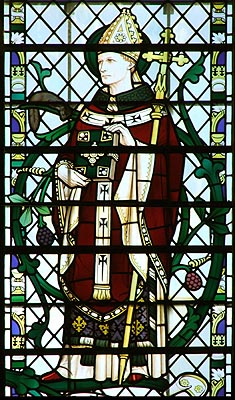
Theodore of Tarsus was Archbishop of Canterbury in the 7th Century. He was from Tarsus, the city of Saint Paul in the East, but relocated to England when the English Church was in dire need of leadership and stability following a plague. He was a great catalyst for uniting Christians throuhgout England who had been fighting with each other.

Its is wonderful that we get to hear from Saint Paul about the Body of Christ in the world on this day. Christian disagree with each other even when they live together, but Paul reminds us that we are all one Body in Christ, many different members but one Body. We all have different gifts and we are all called different roles in the Church. I'm going to hazzard a guess that none of us today here at Saint Mary's will be called as the Archbiship of Canterbury but that doesn't lessen what each of us can bring to Our Lord's Table.

We each receive from the same broken bread and same cup of wine at our Lord's Table, likewise we are each members of the one Body of Christ. Saint Paul calls us to cultivate the gifts we have and use the role we have in the church. One way we can live our roles in the church and use those gifts is to unite Christians and help them to realize that we are all one Body in Christ.

Monday, September 18, 2006

Dr. Edward B. Pusey


Sermon preached on Monday, September 18, 2006
Year 2, Proper 19, Monday, Daily Mass:
Psalm 40:8-12, 1 Corinthians 11:17-28,33; Luke 7:1-10

Today we celebrate the feast day of Edward Pusey, one of the founding fathers of the Oxford Movement. The Oxford Movement was a concerted effort by English laity and clergy (some of whom were Dons at Oxford and Cambridge) to bring back beauty of worship and a reverence for the Body of Christ. Saint Mary's was built as an American companion to this movment. The worship, the building, and a great part of the identity of the church are rooted in much of the thinking of the Oxford Movement.

Today we have a new ambo or lectern. Its beautiful. We also have in our presence our own incense meister, Kenny, who has come back to New York to make a new batch of his wonderful incense for us. Beatiful furnishing and incense are things that can add beauty and majesty to our worship, not to spice up the ceremony, but to bring our whole bodies, our hearts, our mouths, our noses, our eyes, and our ears into worshipping the glory of God and reverencing the Presence of Christ in the Sancrament.

Our gospel today speaks of worthiness. Its not through our own merit that we are worthy to stand before God, it is through the work of Jesus Christ who brings our very humanity into God. One of the main tenets of the Oxford movement was that God was for all of us. The beauty of worship and the revernece for God is somethat that all people can enjoy and share. Pusey and the other founders of the Oxford Movement, were not interested in making Church a good looking and beautiful club. They were interested in bringing about a reverence for Christ and letting all people know they were worthy through Christ. By treating the Sacrament with reverence and taking great care in our worship we quite leterally open the door to all people. That reverence extends to all who recieve communion and beyond to the entire Body of Christ in the world.

I invite you, following in the spirit of the Oxford Movement to expereince the real presence of Christ in Communion and to take the knowledge that through Christ you are made worthy and bring it to others. Invite others by letting them know that Jesus Christ died and rose for them too.

Sunday, September 17, 2006

Lend a hand, not a snide remark


Sermon preached Sunday, September 17, 2006
Proper 19: Closest to September 14
Psalm 116 or 116:1-8; Isaiah 50:4-9; James 2:1-5,8-10,14-18; Mark 8:27-38

In today's Gospel we hear the account of Saint Peter's confession of Jesus as Christ. I can't tell you how many sermons I heard when I was in Seminary that used this gospel as a platform for bashing Saint Peter: "True Peter confessed Jesus, but he didn't really jknow what he was talking about."; "Well, if you keep reading the Gospel you find that Peter denied Jesus and fled."; etc. Its almost popular for preachers to remind us over and over that Peter and the other apostles weren't perect. In fact, I know I've done it myself.

They weren't perfect; you and I aren't perfect. Taking up our crosses and following Jesus is not an easy thing to do. Every Friday during Lent we offer a service called Stations of the Cross. As we walk with Jesus on the way of the cross we see Jesus fall three times under the weight of the cross. There are two responses to this. Some jeer at Jesus and offer snide remarks. But Simon of Cyrene offers a helping hand. He assists Jesus with the cross that is always difficult to take up.

Saint Peter and the other apostles fell and stumbled with the crosses they took up, as we all do. I'm not sure its helpful to concentrate on the stumbling and the falling - to me it comes off like we are people on the sidelines who offer nothing but snide remarks. I think its more hlepful to follow the example of Simon and the example of the apostles themselves who supported each other with the crosses that they bore as they followed Christ and spread the Gospel to the whole world.

Support each other and lend a hand to those who stumble in their faith because it isn't easy following Christ and its never easy taking up the cross. Pray for support from those around you in the times when we all stumble.

Wednesday, September 13, 2006

Saint Cyrpian


Sermon preached at Sung Mass on Spetember 13, 2006
Year 2, Proper 18, Wednesday, Daily Mass: Psalm 47, 1 Corinthians 7:25-31; Luke 6:20-26

Today we celebrate the feast day of Saint Cyrpian, Bishop of Carthage and martyr. Cyprian is remembered for being very popular among the poor of Carthage. He had been a wealthy pagan before his baptism and when he was converted he gave much of his money to the poor. He is also remembered for weighing on on the issues of his day in a way that was not heavy handed.

Cyrian lived in the middle of the 3rd century at a time when the Church was hashing out and fighting over many internal issues - when isn't the church hashing out and fighting over many internal issues. Two of these issues were the readmittance of lapsed Christians - Christians who had succumbed to official Roman pressure to worship the Romans gods - and the validity of Baptism by heretics.

Cyprian generally sided with the more narrow view on both of these issues, but not to an extreme. He welcomed lapsed Christians backed but he believed that they ought to be repentent of what they had done. In line with his most famous quote: "No salvation outside the Church", he felt that Baptism by a heretic was invalid because it was done outside the Church, yet he argued his position in a civil way and listened to other bishops in North Africa as well as throughout the church.

As we celebrate Saint Cyrpian we are reminded by today's Gospel that it is the people who make up the church. In our dealings with other Christians let our convictions over any issue not get in the way of remembering that all who confess Christ are members of the Body of Christ.

Tuesday, September 12, 2006

The Apprenticeship of Wilhelm Meister


One of my favorite books, which I began rereading again at the end of my vacation - I haven't had much time to read lately, but I'm working through it - is by Goethe; its called the Apprenticeship of Wilhelm Meister.

The book follows Wilhelm's attempt to escpape the confinement of every day life... something which actually rings fairly true to many people today. Where he ends up... well that's all part of the story. I won't spoil the book, but its a good read, but his escape turns out to be a road to self-realization and a path to maturity of a sort he never imagined.

As Christians its helpful to remember that we don't always see exactly the path we are on. One thing is certain, if we are following Christ, it means confessing Jesus who died and rose on our lips and in our hearts.

John Henry Hobart


Sermon Preached on Tuesday, September 12, 2006
Year 2, Proper 18, Tuesday, Daily Mass: Psalm 149:1-5, 1 Corinthians 6:1-11; Luke 6:12-19

Today we celebrate John Henry Hobart, who served as bishop of New York at the beginning of the 19th century. Bishop Hobart is remembered mostly for his zeal in growing the disocese of New York. While he was bishop he doubled the number of priests in the discoese and planted new churches in nearly every town in the Diocese. His zeal for spreading the Gospel was contageous and was cought up by the clergy and people of the New York. His efforts not only grew the Episcopal Church, they also evangelized and energized much of New York.

Today we begin Saint Luke's account of the Sermon on the Plain. It is remarkable how Luke narates that Jesus came down from the mountain where he was alone with his disciples to be among all of the people. Whether we consider ourselves church leaders or not, our commission is the same: we are all called to bring the Gospel to all nations and to make Jesus presence known among all people.

The example of Bishop Hobart is a good one. Let the joy and zeal for the Gospel that the Holy Spirit filled him with also fill us so that we can evangelize and energize those around us and make the presence of Christ know to everyone, not as someone who is far off but as someone who is present in their midst.

Monday, September 11, 2006

5 Years after September 11, 2001


Sermon preached on September 11, 2006 at Sung Requiem Mass at Saint Mary's .

For years I played ice hockey; less now than in the past few years, and in fact I haven’t played since 2000. Hockey can be a rough game and in high school I was sent to the hospital with a few broken, cracked, and bruised ribs. To this day, the pain from that injury occasionally bubbles to the surface and my ribs hurt. For me, hockey brings to mind other wounds that haven’t completely healed. I used to play hockey with a bunch of investment bankers and lawyers up at Riverbank State Park. On September 11, a couple of guys who made up my line were killed in the World Trade Center. To this day, every time I think about hockey I think about those guys.

I imagine that each us has a similar story. Some lost family members. Others lost close friends. Others lost people they had worked with or had gone to school with or played with. Others know someone who lost someone dear. All of us have stories that are hard to tell and that cause pain to bubble to the surface like old injuries that never really healed.

I imagine, like me, the stories that we all tell don’t stop there. When I remember those guys I think of the good times we had together on the ice. I think of the goals we scored and the celebrations that we had. I think of the times we banded together to make a stand and hold off the other team. I remember the good times much more than I remember the bad.

All of our readings today remind us that the heart of the Gospel of Jesus Christ is God’s love for all of us. The Wisdom of the Old Testament tells us that the souls who are with God are at peace, suffering no torment and abiding forever in God’s love. Saint John tells us as he describes his revelation that those who are with God do not lack anything, God himself wiping away every tear from their eyes. In our Gospel reading Jesus reminds us that he is the Good Shepherd who will never let anything happen to his sheep. He knows us all by name and no matter where we are, he will find us and bring us home.

One of my favorite Gospel passages is the one where Jesus talks about preparing a place for us in his Father’s house, a house with many rooms. Having died, risen, and ascended, he is now preparing a place for all of us. Every one of us goes home to God and he is waiting for us with open arms and a place prepared. The love of God is amazing and it cannot be overcome by anything, not even death.

I miss my friends, but I know I will see them again. I know I will see them when I meet my Lord and my God and when I experience completely the love of God that I see working in the hearts, hands, and words of people around me: friends, family, strangers.

Today we remember those who died five years ago. In different ways we celebrate their lives. But we come together to celebrate that through the death and resurrection of Jesus they and we have eternal life and we celebrate that through Christ the love of God binds us all together forever. Through the resurrection of Jesus we know that death does not separate us from God or from each other. Jesus promised us that he knows us all by name, and just as Lazarus came out of the tomb when Jesus called his name, so he calls all of us and he gathers us all together: one flock, one shepherd.

I only have one message for you today: Let the love for those we do not see anymore grow in us so that it overflows and shows itself to others. Showing love beyond telling stories and remembering and into showing the love that God has for them and for us to others.

Tuesday, August 22, 2006

Revised Common Lectionary


Thoughts for the future...

A version of the Revised Common Lectionary (that has not yet been finalized for the Episcopal Church) was offically passed by General Convention this year as the lectionary for the Episcopal church. Personally, I find it troubling that any church would approve of a lectionary that hasn't yet been finished. Be that as it may. In any case, I am doing a complete and thorough analysis (something that also strangely was not available to any delegates at Convention) of the draft ECUSA version of the RCL. I am teaching a class on this at Saint Mary's on October 1st and I will post my results here.